

What Is PD & Why Is It Important?
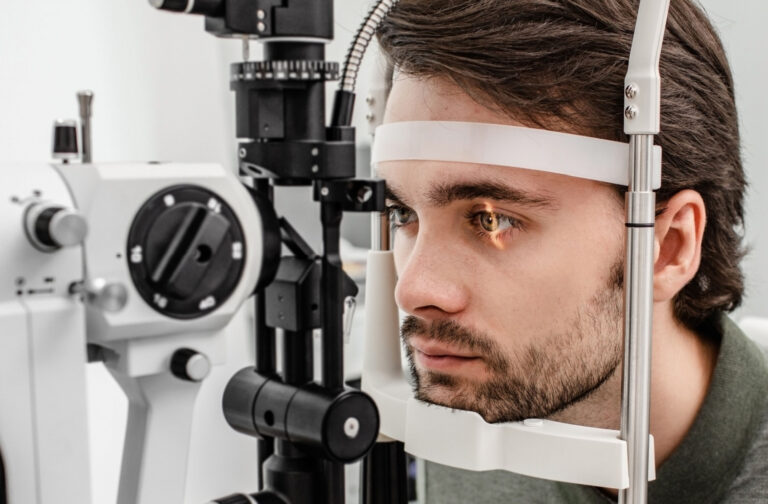
Your eyes are remarkable organs and an important part of your body as they allow you to see and perceive the world around you. To take good care of them, it is important to go for regular eye exams. In an eye exam, you can learn about your pupillary distance (PD).
PD is the measurement between your eyes, specifically the centers of your pupils, which helps in getting the right prescription for glasses or contact lenses.
What Is PD?
Pupillary distance (PD) is typically expressed in millimeters and is crucial for accurately positioning prescription lenses in eyeglasses.
An accurate PD measurement ensures the optical centers of the lenses align with your pupils, optimizing visual clarity and reducing eye strain.
Monocular vs. Binocular PD Measurements
PD measurements are classified into 2 types:
- Monocular PD: This is the measurement between the center of your pupil and the middle of your nose bridge. Monocular PDs are important for correct progressive lens fittings.
- Binocular PD: This is the distance between the center of the pupil of the left eye and the center of the pupil of the right eye.
Monocular PDs aren’t usually identical due to facial asymmetry. However, the sum of your 2 monocular pupillary distance measurements should always equal your binocular pupillary distance.
The Importance of an Accurate PD
Knowing your PD is important for getting the right prescription for your glasses or contact lenses. Without an accurate measurement, you may experience discomfort, eye strain, or headaches. During your eye exam, your eye doctor may measure your PD, but it’s important to confirm it yourself as well.
Precision in Prescription Lenses
Your prescription lenses are designed to correct refractive errors such as nearsightedness, farsightedness, and astigmatism. An accurate PD measurement ensures the corrective power is placed where it’s needed, maximizing the effectiveness of your eyeglasses.
Binocular Vision
Humans have binocular vision, meaning our eyes work together to perceive depth and 3D space. An incorrect PD measurement can lead to visual discomfort, double vision, and issues with depth perception.
Optimal Visual Performance
Whether reading a book, working on a computer, or driving, an accurate PD measurement contributes to optimal visual performance. It enhances the quality of your vision, allowing you to see clearly at various distances.

How to Measure Your PD
Eye doctors use specialized tools to measure your PD. These measurements are precise and tailored to your visual needs. Having your PD measured by an eye doctor whenever possible is best; however, if they omitted it from your eyeglass prescription, don’t panic. You can measure your PD on your own.
To get an accurate measurement, be sure to take your time and do it at least twice:
- Grab a ruler with millimeter measurements and a mirror.
- Make sure to look into the distance as you measure.
- Rest the ruler against your nose, then line up the middle of your left eye’s pupil with the 0 marker on the ruler.
- Measure the distance across to the middle of your right eye’s pupil. Your PD measurement should be between 46 and 74 millimeters.
- Adult women’s PD is typically between 46mm to 65mm.
- Adult men’s PD is typically between 59mm to 74mm.
- Repeat these steps 2–3 times to get a consistent and accurate number.
PD Frame Measurement
Frame measurement is also an important factor to consider when measuring PD. Frames come in various sizes, and PD influences the placement of lenses within the frame.
Use your current glasses as a reference point to ensure your new frames fit well. Opt for frames that have a bridge width compatible with your PD to help ensure the distance between the lenses matches the distance between your pupils.
The Crucial Role of Pupillary Distance in Eye Care
PD may seem like a small technical detail, but its significance in eye care cannot be overstated. An accurate PD measurement is the key to unlocking clear and comfortable vision through glasses or contacts. Whether you’re getting a new prescription or updating your eyewear, the friendly staff at Eye Care Plus is here to help you with an accurate PD measurement. Book an appointment today at either our South Coulter or Grand location!


South Coulter Location
Phone:
(806) 855-8090OFFICE HOURS:
- Monday 8:00am - 5:00pm
- Tuesday 8:00am - 5:00pm
- Wednesday 8:00am - 5:00pm
- Thursday 9:30am - 5:00pm
- Friday 8:00am - 4:00pm
- Saturday 9:00am - 12:00pm
- Sunday Closed
Grand Location
OFFICE HOURS:
- Monday 8:30am - 5:00pm
- Tuesday 8:30am - 5:00pm
- Wednesday 8:30am - 5:00pm
- Thursday 9:30am - 5:00pm
- Friday 8:30am - 4:00pm
- Saturday Closed
- Sunday Closed
© 2026 Eye Care Plus. All rights Reserved. Accessibility Statement - Privacy Policy - Terms and Conditions - Sitemap
Powered by:
