

The Visual Fingerprint: How Digital Wavefront Technology Eliminates Nighttime Glare and Halos

Driving after sunset can become frustrating when headlights create glare, halos, or starburst patterns. Some people also notice reduced contrast, blurred road signs, or difficulty adjusting between bright and dark areas. Even with an updated glasses prescription, these problems may continue because traditional vision testing does not always capture every optical irregularity affecting nighttime vision.
Why Nighttime Vision Can Be Different
During the day, the pupil becomes smaller and limits the amount of light entering the eye. In darker conditions, the pupil expands to gather more light. This can expose subtle optical imperfections that may not be as noticeable in a brightly lit exam room.
Nearsightedness, farsightedness, and astigmatism are common causes of blurred vision, but they are not the only factors that affect visual clarity. Higher-order aberrations are more complex distortions in how light moves through the eye. These imperfections may contribute to glare, halos, ghost images, starbursts, and reduced contrast at night.
Creating Your Visual Fingerprint
Digital wavefront technology maps how light travels through each eye. The resulting measurements create a detailed visual fingerprint that is unique to the patient.
This technology can help us evaluate factors such as:
• Subtle refractive errors that may affect sharpness
• Higher-order aberrations associated with glare and halos
• Changes in vision under different lighting conditions
• Differences between the optical performance of each eye
These detailed measurements give our Amarillo eye doctors additional information that may not be available through standard refraction alone.
More Personalized Vision Correction
A traditional prescription measures the lens power needed to correct common refractive errors. Digital wavefront technology goes further by helping us understand the complete optical system of the eye.
When appropriate, wavefront measurements may be used to refine a prescription and recommend personalized lenses designed to improve visual quality. Patients may experience sharper details, better contrast, and more comfortable vision in dim lighting. This can be especially valuable for people who regularly drive at night, work in low-light environments, or struggle with bright headlights.
Although no technology can guarantee that every halo or source of glare will disappear, a more precise prescription may significantly reduce symptoms caused by uncorrected optical imperfections.
When Glare and Halos Require an Eye Exam
Nighttime glare is not always caused by a glasses prescription. Dry eye disease, cataracts, corneal irregularities, and other eye conditions can also affect how light enters the eye. That is why a comprehensive eye exam is important before recommending new lenses.
During your visit, we can evaluate your prescription, eye health, tear film, and visual symptoms. By combining advanced diagnostic technology with personalized care, we can determine whether digital wavefront testing may help improve your nighttime vision.
Schedule a comprehensive eye exam with Eye Care Plus to learn how digital wavefront technology can help create lenses tailored to your unique vision. Contact our offices in Amarillo, Texas, by calling (806) 855-8090 for our South Coulter location, or (806) 318-5055 for our Grand location to book an appointment today.
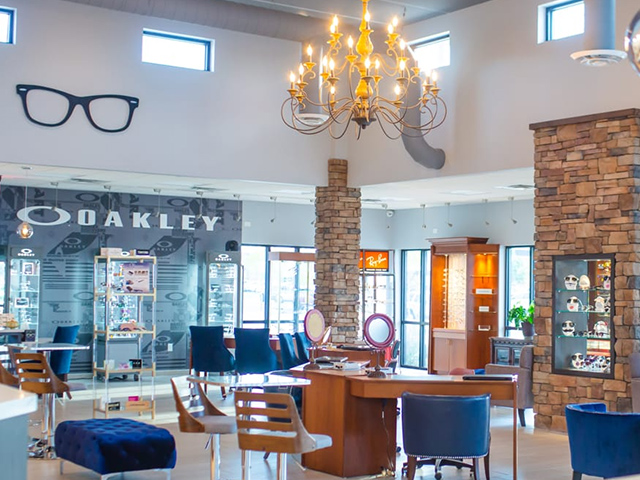

South Coulter Location
Phone:
(806) 855-8090OFFICE HOURS:
- Monday 8:00am - 5:00pm
- Tuesday 8:00am - 5:00pm
- Wednesday 8:00am - 5:00pm
- Thursday 9:30am - 5:00pm
- Friday 8:00am - 4:00pm
- Saturday 9:00am - 12:00pm
- Sunday Closed
Grand Location
OFFICE HOURS:
- Monday 8:30am - 5:00pm
- Tuesday 8:30am - 5:00pm
- Wednesday 8:30am - 5:00pm
- Thursday 9:30am - 5:00pm
- Friday 8:30am - 4:00pm
- Saturday Closed
- Sunday Closed
© 2026 Eye Care Plus. All rights Reserved. Accessibility Statement - Privacy Policy - Terms and Conditions - Sitemap
Powered by:
