

Can Optometrists Treat Eye Infections?

Even if you keep up with a regular eye care routine, an eye infection could emerge, causing discomfort and affecting your quality of life. But who should treat your eye infection? Your physician, your optometrist, or someone else?
We’ll dive into where you should seek medical attention and provide more details on some common types of eye infections.
Please note, if your eye infection is in conjunction with severe pain, excessive discharge, or fever, see your eye doctor immediately.
Seeking Treatment for Your Eye Infection
When something is awry medically, your first thought may be to see your family physician. And, sure, you could go to them for assistance, but there may be a significant wait, and they may not have the specialized optometric equipment that an eye doctor has.
With special equipment, optometrists can accurately diagnose your eye infection and provide guidance if the results show signs of any eye diseases or conditions.
As experienced and trained professionals, optometrists are qualified to diagnose your situation and prescribe some medication. However, if your symptoms indicate any kind of eye disease or chronic eye infection, the optometrist may refer you to an ophthalmologist—an eye doctor who specializes in eye surgeries and eye disease treatment.
So to answer our primary question, yes, optometrists can treat eye infections. And knowing the types of eye infections can help you accurately describe your situation to your eye doctor. Let’s dive into the different types of eye infections.
Bacterial Infections
Bacteria is everywhere, and when it comes into contact with your delicate ocular organs, it can cause infections. Here are two of the most common bacterial infections, their symptoms, and possible treatments.
Bacterial Conjunctivitis (Pink Eye)
This common eye infection occurs when bacteria enter and infect the conjunctiva, the thin membrane that covers your eyeball. It can emerge in one or both eyes.
Symptoms of bacterial pink eye include burning, itchy eyes, and a thick yellow pus-like discharge. When this discharge hardens overnight, it can be difficult to open your eyes due to crust buildup.
Luckily, bacterial pink eye can be remedied with antibiotic eye drops, ointments, or oral medications. Your eye doctor will prescribe treatment for at least 5 days, and your symptoms should subside within a couple of days of finishing your treatment.
Styes
Do you have a tender, red bump on your eyelid? It could be a stye. This bacterial eye infection results from a clogged oil gland on the eyelash line, causing inflammation and the tell-tale red bump.
Styes generally appear in one eye at a time, but they are contagious and can be passed over to your other eye if not addressed promptly.
Apart from the stye itself, which is a swollen, red bump, other symptoms can include:
- redness
- eye pain
- swelling
- burning
- tenderness
- discharge
You should prioritize treating a stye as they are highly contagious—you also probably crave some relief from the discomfort. While styes normally subside on their own within 3 to 5 days, some remedies are available to help expedite the healing process. Follow these recommendations if you have a stye:
- Apply a warm compress over your eye for 20 minutes, 4 times a day.
- Clean your eyelids with warm water and a small amount of mild, scent-free soap.
- Avoid wearing contact lenses until the stye heals—wear glasses instead.
- Avoid wearing eye makeup.
- Do not try to pop it or squeeze it.
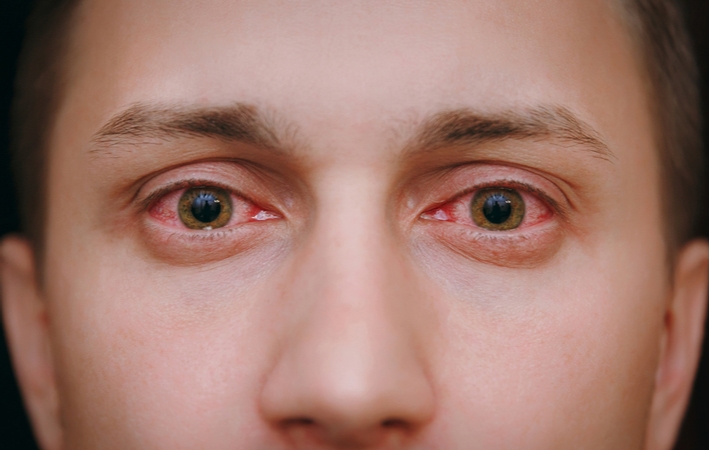
Viral Infections
Viral infections are highly contagious, with the most common type being viral pink eye.
Viral Conjunctivitis (Pink Eye)
Yep, here it is again, but this time it’s viral. Unfortunately, viral pink eye spreads easily, so if you notice symptoms in yourself or, if you’re a caregiver, in your child, maintain exceptional hygiene practices and have your child stay home from school to avoid passing it around among their peers.
Viral pink eye commonly affects both eyes, and its symptoms can include teary eyes, swollen lymph nodes, translucent mucus discharge, and, of course, pink eyes.
Unfortunately, no treatment works for viral pink eye, but you can use a warm compress on the eyes to alleviate discomfort. This form of pink eye will run its course within a week to 10 days. Even so, it’s important to visit your optometrist so they can rule out bacterial pink eye.
Ocular Herpes
Caused by the herpes simplex virus, ocular herpes can be dormant in the nerves for a lifetime, but occasionally outbreaks happen.
Some indications of ocular herpes include:
- swelling around the eyes
- tearing
- irritation
- eye redness
- eyesores
- watery eye discharge
- sensitivity to light
Your eye doctor can diagnose your infection, and if it’s ocular herpes, they can prescribe antiviral medication.
Keep it Clean
Your best defence against eye infections depends on keeping your eyes clean—useful for both preventive care and relief when you have an eye infection.
To prevent eye infections:
- Always wash your hands before handling contact lenses or touching your eyes.
- Keep bedding and towels clean.
- If you wear contact lenses, ensure proper cleaning to prevent bacteria from growing.
When you or a close contact has an eye infection:
- Do not rub your eyes, as this can exacerbate irritation and swelling.
- Do not touch the infected area (but always wash your hands in case you accidentally touch your eyes).
- Do not share bedding and towels with someone who has an eye infection.
Set Your Sights on Healthy Eyes
While most eye infections do not pose a serious health risk, they can be irritating and uncomfortable, and luckily, most of them are treatable.
If you get an eye infection, visit your optometrist and follow their guidance or treatment plan. Seeking medical attention can get you the relief you crave and spare your close contacts from catching your eye infection.
If you have any questions, please reach out. We are always here to answer your eye health inquiries.


South Coulter Location
Phone:
(806) 855-8090OFFICE HOURS:
- Monday 8:00am - 5:00pm
- Tuesday 8:00am - 5:00pm
- Wednesday 8:00am - 5:00pm
- Thursday 9:30am - 5:00pm
- Friday 8:00am - 4:00pm
- Saturday 9:00am - 12:00pm
- Sunday Closed
Grand Location
OFFICE HOURS:
- Monday 8:30am - 5:00pm
- Tuesday 8:30am - 5:00pm
- Wednesday 8:30am - 5:00pm
- Thursday 9:30am - 5:00pm
- Friday 8:30am - 4:00pm
- Saturday Closed
- Sunday Closed
© 2026 Eye Care Plus. All rights Reserved. Accessibility Statement - Privacy Policy - Terms and Conditions - Sitemap
Powered by:
